
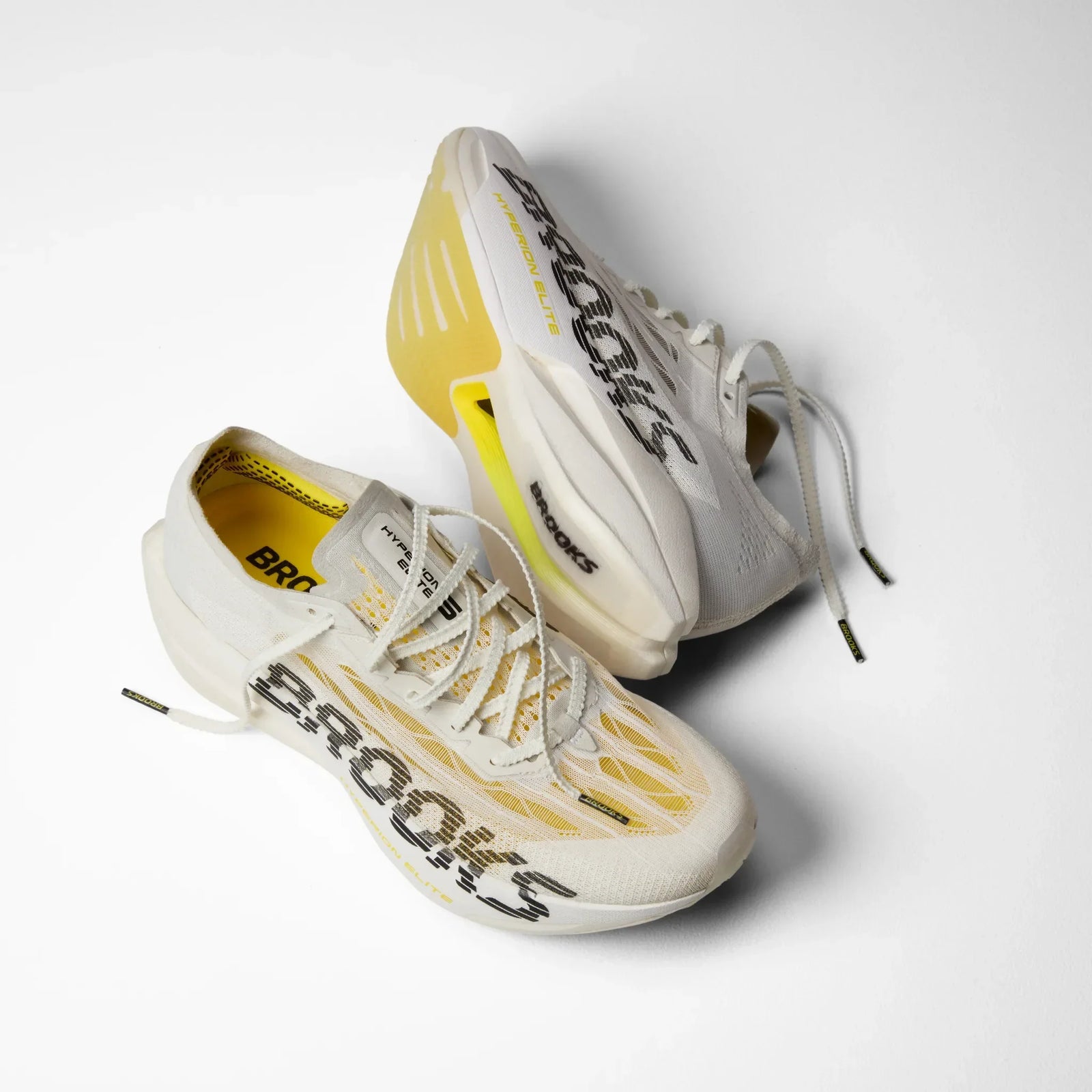
What's the difference between the Brooks Hyperion Elite 6 and the Hyperion Elite 5? In this Brooks Hyperion Elite 6 vs 5 comparison, we go through the foam, the carbon plate, the stability, the drop and the weight, so you know which one to race in next.
The short answer: the Hyperion Elite 5 split opinion, with a foam many found too soft and a plate bump you could feel under the midfoot. The Hyperion Elite 6 fixes exactly those two complaints. So the real question isn't which one is newer, it's what you actually gain by moving to the 6.
Both are carbon plate running shoes (what we call super shoes) built for race day, with 40 mm of foam at the heel. What changes is the firmness of the foam, the geometry of the plate, midfoot stability and the drop. Here's the full comparison.
In short
The Hyperion Elite 6 gets a firmer, bouncier DNA Gold foam, a re-angled SpeedVault+ plate sitting further under the toes, a midfoot platform widened by 5 mm, and a mesh wrap that makes the plate bump from the 5 disappear. Drop down to 7 mm, weight under 200 g.
The Hyperion Elite 5 is still a real race shoe, softer underfoot and with an 8 mm drop. It still makes sense as a second pair, or if that's the feel you like.
Contents
The Hyperion Elite 5 in brief
The Hyperion Elite 5 was a real step forward for Brooks: PEBA-based DNA Gold foam, 40 mm of stack at the heel, a SpeedVault carbon plate and a weight of about 199 g in a men's 8.5. On paper, everything was there.
In practice, two things came up again and again. First, a very soft foam, lovely on first contact, but it sank a little as the pace picked up, to the point of feeling flat at speed. Second, a narrow midfoot platform (55 mm) combined with the plate, which created a noticeable bump under the arch. Nothing dramatic, but enough that some runners never felt completely at home in it over marathon distance.
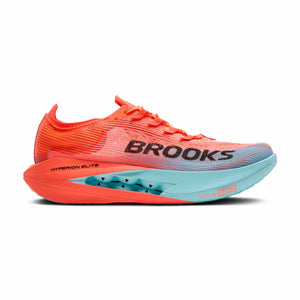
Brooks Hyperion Elite 5
The Hyperion Elite 6 in brief
The Hyperion Elite 6 keeps the same foam height (40 mm at the heel) but reworks everything that was a problem. DNA Gold is reformulated in multiple densities: firmer and bouncier than the 5's, without turning harsh. A mesh wrap stabilizes the foam along the outside of the midsole and, above all, it makes the plate bump disappear at the midfoot.
The SpeedVault+ carbon plate is re-angled and moved further under the toes: forefoot pop is noticeably sharper. The midfoot platform gains 5 mm (from 55 to 60 mm), which you feel directly in stability once fatigue sets in. The forefoot picks up 1 mm of foam, bringing the drop from 8 to 7 mm, and the weight still drops below 200 g: about 198 g in a men's 9, 172 g in a women's 8.
A few practical details before you try them on. This is a neutral shoe, offered in standard width (D) only. If you need a wide fit, this isn't the model. Its Crystal rubber outsole uses targeted traction zones rather than full coverage, which saves weight. One more thing to watch: the 5 is listed in unisex sizes on the men's scale, while the 6 is listed in M/W pairs. Double-check the conversion when you order.
The result: a race shoe far more accessible than the category average. It works just as well at 5K pace as at marathon pace, without demanding a perfectly calibrated stride to deliver, which isn't true of every super shoe. It's aimed at the neutral runner chasing road performance, from 5K to the full marathon; it is not a daily trainer.
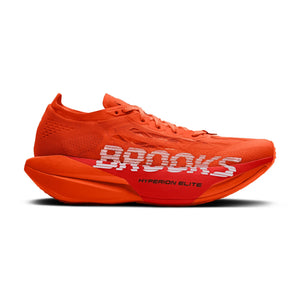
Brooks Hyperion Elite 6 New for 2026
The key differences
| Hyperion Elite 5 | Hyperion Elite 6 | |
|---|---|---|
| Foam | DNA Gold PEBA, very soft | Multi-density DNA Gold, firmer and bouncier |
| Plate | SpeedVault carbon | Re-angled SpeedVault+, further under the toes |
| Midfoot | 55 mm platform, noticeable plate bump | 60 mm platform + mesh wrap, bump gone |
| Stack | 40 mm / 32 mm | 40 mm / 33 mm |
| Drop | 8 mm | 7 mm |
| Weight | ≈ 199 g (men's 8.5) | ≈ 198 g (men's 9) · 172 g (women's 8) |
| Upper | Racing mesh | Perforated flat knit, heel pillows |
| Width offered | D (standard) | D (standard) |
In other words: foam height and weight barely move. What changes is the quality of the energy return and the stability, which is exactly what makes the difference over the last 10 kilometres of a marathon.
Which Brooks Hyperion Elite should you choose?
In the vast majority of cases, choose the Hyperion Elite 6: it's better on foam, plate, stability and midfoot comfort. Here's the breakdown by situation.
Choose the Hyperion Elite 6 if…
- you're targeting a marathon or a half and want a shoe that stays stable when fatigue arrives;
- the plate bump on the 5 bothered you under the arch;
- you found the 5 too soft and you want sharper energy return;
- you want a versatile race shoe, as happy on a hill session or a 5K as over 42.2 km.
Choose the Hyperion Elite 5 if…
- you're after a second racing pair to alternate, or for your less important races;
- you like a very soft feel underfoot and an 8 mm drop;
- you already wear one, it suits you perfectly, and you simply want a spare pair on hand.
Our take in store: if you already own the Hyperion Elite 5 and were never bothered by the midfoot bump or the softness of the foam, there's no rush. But for a first purchase, or if either of those two points annoyed you, the 6 is the right answer. Best of all is to try them side by side in store.
Browse our men's carbon plate running shoes and women's, our men's performance running shoes and women's, or the full Brooks collection.
What about the Saucony Endorphin Elite 3?
That's the other big question we get in store. The Saucony Endorphin Elite 3 plays in the same category, but not the same price bracket: $369.95, or $70 more than the Hyperion Elite 6. It delivers a more aggressive, more “mechanical” feel that rewards a fast, well-calibrated stride.
The Hyperion Elite 6, for its part, bets on accessibility: it works across a wider range of paces and strides, and it's more forgiving late in a marathon. If you're torn between the two, it really comes down to budget and feel. That gets settled in 10 minutes of trying them on.
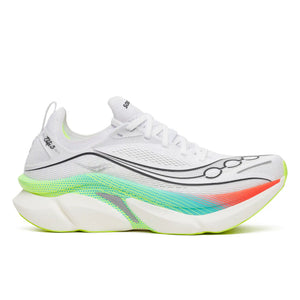
Saucony Endorphin Elite 3
Frequently asked questions
Ready to pick your Brooks race shoe?
The Hyperion Elite 6 is the obvious choice, and both generations carry the same regular price. If the discount on the Hyperion Elite 5 is still running, it's a fine way into carbon plate shoes. Come try them side by side in store: that's where the decision gets made fastest.