

Running through a Quebec winter isn't running in the rain with a jacket on. It's slush during the thaw, packed snow on the sidewalks, black ice at dawn and road salt everywhere. A good winter running shoe solves three problems at once: it keeps your foot dry, grips the surface and blocks the wind. Here is our 2026-2027 selection: twelve models we carry in store, from waterproof road shoes for cleared sidewalks to a carbide-studded shoe for ice, with our picks for women and for men.
The good news is that winter running shoes aren't some mysterious separate category: a winter running shoe is a model you already know, with a waterproof membrane and a grippier outsole. The real question isn't the brand, it's what you run on between December and March. In Quebec, the answer is almost always the same: it isn't clean pavement, so a trail outsole does a better job than a road outsole, even in the city.
Which winter running shoes should you choose?
For snow, slush and trails, a waterproof trail shoe: the Brooks Cascadia 20 GTX for versatility, the Saucony Peregrine 16 GTX for grip, the ASICS Trabuco 14 GTX for technical terrain, the Salomon Genesis 2 GTX for precision and the Salomon Speedcross 6 GTX for soft snow. If you mix pavement and packed snow, the Saucony Ride TR3 GTX bridges the gap. On cleared sidewalks, the Brooks Ghost 18 GTX, ASICS Novablast 6 GTX, Mizuno Wave Rider GTX 4 or Saucony Triumph 24 GTX keep the comfort of a road shoe with a membrane added. For ice, the Salomon Genesis 2 GTX Spike with built-in carbide studs, or slip-on traction cleats over your usual shoe. And for zero drop, the Altra Lone Peak 9+ GTX is the only waterproof 0 mm drop shoe we carry.
How we picked these shoes
This selection comes from the Boréal Running team in Quebec City. Most of these models have been around for several generations and we've run them ourselves in winter, on snow, slush and ice. The newest versions have just arrived: we've tried them on and assessed them in store, and we tell you what changed from the previous version. On top of that, we add what our customers tell us after a full season.
Contents
- Our picks for women and men
- What makes a good winter running shoe?
- For snow, slush and trails
- For mixing pavement and packed snow
- For roads and cleared sidewalks
- Special mention: zero drop
- For ice: carbide-studded shoes
- GTX shoes or traction cleats?
- Comparison table
- Which winter shoe for your profile
- Sizing, socks and fit in winter
- The rest of your winter gear
- FAQ
Best winter running shoes for women and men
All our picks come in both versions, with two exceptions noted below. If you want a quick starting point based on where you run, here are our recommendations.
Winter running shoes for women
- Snow and trails: Brooks Cascadia 20 GTX women or Saucony Peregrine 16 GTX women;
- City, pavement and packed snow: Saucony Ride TR3 GTX women;
- Cleared sidewalks: Brooks Ghost 18 GTX women or ASICS Novablast 6 GTX women;
- Firm hold on trails: Salomon Genesis 2 GTX women.
See the full range in our women's winter running shoes collection.
Winter running shoes for men
- Snow and trails: Brooks Cascadia 20 GTX men or ASICS Trabuco 14 GTX men;
- City, pavement and packed snow: Saucony Ride TR3 GTX men;
- Cleared sidewalks: Brooks Ghost 18 GTX men or Mizuno Wave Rider GTX 4 men;
- Soft snow: Salomon Speedcross 6 GTX men.
See the full range in our men's winter running shoes collection. For ice, the Salomon Genesis 2 GTX Spike is unisex.
What makes a good winter running shoe?
Four things separate a real winter shoe from an ordinary running shoe.
The waterproof membrane
That's what GTX means in a model name: a GORE-TEX membrane laminated into the upper. It keeps out water from slush and melting snow, and it blocks the wind, which makes all the difference at minus 15. In exchange, it breathes less than regular mesh. That's the normal winter trade-off, and it's also why a GTX shoe feels uncomfortable in July. Our guide to Gore-Tex trail running shoes explains when the membrane is worth it and when it gets in the way.
Grip, and its limits
This is the most misunderstood point. A trail outsole with real rubber lugs grips packed snow, powder and slush very well. On bare ice, it does almost nothing: rubber hardens in the cold and slides. For hard ice, you need carbide studs: either built into the outsole, like on the Salomon Genesis 2 GTX Spike, or slip-on traction cleats worn over your shoe. We cover both options below.
Warmth, or rather avoiding the cold
A winter running shoe is almost never insulated, and that's on purpose: your foot produces plenty of heat while you run. What freezes your toes is moisture and wind, not a lack of insulation. A membrane and a good merino wool sock do more than a thick lining, which would squeeze your foot and cut off circulation.
Visibility
From November to March, most of your runs happen in the dark. Reflective details on a shoe help, but the rest of your gear does most of the work: reflective jacket, headlamp, armband. More on that below.
For snow, slush and trails
This is the category that covers the most situations in Quebec, including in the city. As soon as snow clearing isn't perfect, a waterproof trail shoe gives you a safety margin that a road outsole doesn't have.
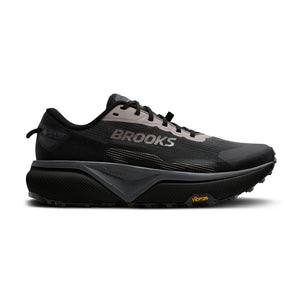
Brooks Cascadia 20 GTX Our pick
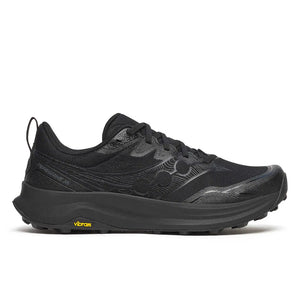
Saucony Peregrine 16 GTX Grip
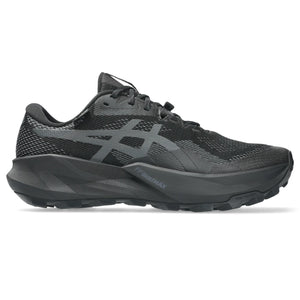
ASICS Trabuco 14 GTX Technical terrain

Salomon Genesis 2 GTX Precision

Salomon Speedcross 6 GTX Soft snow
For mixing pavement and packed snow
The most common case in the city: you start on a cleared sidewalk, cut through a park and finish on pavement. A full trail outsole is overkill, a road outsole isn't enough. That's exactly what the road-to-trail category covers.
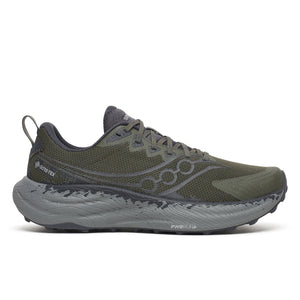
Saucony Ride TR3 GTX Road to trail
For roads and cleared sidewalks
If you run in the city and snow clearing keeps up, you don't need a trail outsole, and it would only tire you out on pavement. You need your usual comfort, with a membrane added.
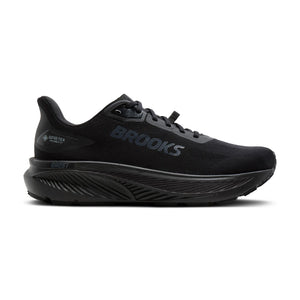
Brooks Ghost 18 GTX Versatile road
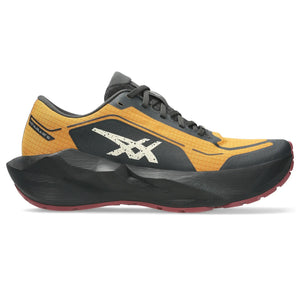
ASICS Novablast 6 GTX Bouncy road
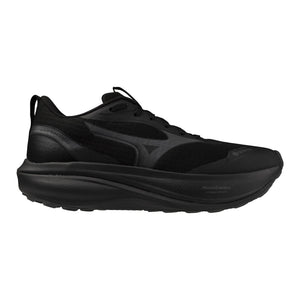
Mizuno Wave Rider GTX 4 Responsive road
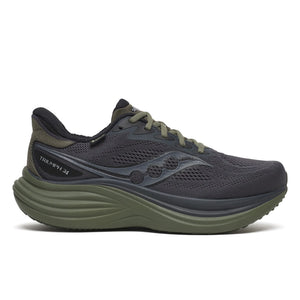
Saucony Triumph 24 GTX Max cushioning
Special mention: zero drop
Runners used to a 0 mm drop often get stuck in winter, because almost no waterproof model keeps that geometry. There is one.
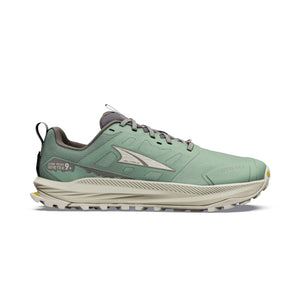
Altra Lone Peak 9+ GTX Zero drop
A word of caution if you've never run in zero drop: winter isn't the time to switch. Your calves and Achilles tendons take more load, and unstable footing already adds its share of work. Save the change for spring.
For ice: carbide-studded shoes
If your route has ice every day, putting traction cleats on and taking them off quickly gets old. A shoe with built-in studs settles the question once and for all.

Salomon Genesis 2 GTX Spike Ice
GTX shoes or traction cleats?
A membrane and rubber lugs take care of snow and water. Ice is a different problem, and no rubber outsole solves it: you need studs. Here's the scale, from the most common case to the rarest.
- Packed snow, slush, trails: a GTX trail shoe is enough. That's the vast majority of winter runs in Quebec;
- Well-cleared sidewalks: a GTX road shoe, more comfortable and smoother on pavement;
- Occasional ice: keep your GTX shoe and add slip-on traction cleats, which stretch over the outsole and come off as soon as the surface is back to normal. The Runlite cleats (10 tungsten studs) are light and designed for city running;
- Bare ice or regular patches of black ice: a shoe with built-in studs like the Salomon Genesis 2 GTX Spike, or more aggressive cleats like the Spike Trail (13 spikes of 7 mm) on trails. Anything less and you're accepting a risk of falling that nothing in the shoe can make up for.
Two things to know. Rubber hardens below zero: even Vibram Megagrip loses much of its bite on bare ice, no matter how deep the lugs are. And slip-on cleats aren't made to cover kilometres of pavement, they wear quickly. They're an accessory you put on and take off depending on the run, not a permanent solution. Drop by the store: we'll look at your route and show you what works.
Comparison table
| Model | Surface | Outsole | Best for |
|---|---|---|---|
| Brooks Cascadia 20 GTX | Trail and mixed | Vibram Megagrip, 4 mm | The versatile pick, packed snow and trails |
| Saucony Peregrine 16 GTX | Trail | Vibram MegaGrip, 4 mm | Maximum grip, low profile, gaiters |
| ASICS Trabuco 14 GTX | Technical trail | ASICSGRIP | Rough terrain, flexible upper |
| Salomon Genesis 2 GTX | Trail | High-traction Contagrip | Firm hold, off-camber footing |
| Salomon Speedcross 6 GTX | Soft snow and mud | Mud Contagrip | Powder and ungroomed trails |
| Saucony Ride TR3 GTX | Road to trail | PWRTRAC, 3.5 mm | Mixing pavement and packed snow |
| Brooks Ghost 18 GTX | Road | Wet Traction | Neutral daily runs, cleared sidewalks |
| ASICS Novablast 6 GTX | Road | ASICSGRIP | Bouncy cushioning, daily runs |
| Mizuno Wave Rider GTX 4 | Road | W-Grip | Lively daily runs |
| Saucony Triumph 24 GTX | Road | Road rubber | Long runs, maximum cushioning |
| Altra Lone Peak 9+ GTX | Trail | Vibram Megagrip | Zero drop runners |
| Salomon Genesis 2 GTX Spike | Ice and hard snow | Contagrip with carbide studs | Icy routes, no cleats to install |
All these models come in men's and women's versions, except the Genesis 2 GTX, currently in the women's version, and the unisex Genesis 2 GTX Spike. See the full range in our men's winter running shoes and women's winter running shoes collections.
Which winter shoe for your profile
You run in the city, on cleared sidewalks
Brooks Ghost 18 GTX if you want the most predictable neutral comfort, ASICS Novablast 6 GTX if you like a bouncy ride, Mizuno Wave Rider GTX 4 if you like a livelier stride, Saucony Triumph 24 GTX if your runs are long and you want maximum cushioning. If your streets are poorly cleared every other week, go with the Ride TR3 GTX or the Cascadia 20 GTX instead.
You mix streets, parks and uncleared paths
That's the profile of most of our customers. Cascadia 20 GTX if snow makes up a big part of your route, Ride TR3 GTX if most of it is still pavement: enough lugs for packed snow, smooth enough not to suffer on the street sections.
You run trails in winter
Peregrine 16 GTX for pure grip, Trabuco 14 GTX if the terrain is technical and changing, Genesis 2 GTX if you want Salomon's firm hold on off-camber footing. Add gaiters and warmer socks: in deep snow, what soaks your foot often gets in over the top of the shoe.
You run in soft snow and powder
Speedcross 6 GTX. Its deep, widely spaced lugs are made for surfaces that give way and clog. Don't make it your only pair if half your route is pavement: it's too firm for that.
You run in zero drop
Lone Peak 9+ GTX, the only waterproof 0 mm drop shoe we carry. Don't use winter as the time to try zero drop if it isn't already your habit.
Your route has bare ice
Go with the Salomon Genesis 2 GTX Spike if ice is a daily thing, or add slip-on traction cleats to your GTX shoe if it's occasional. See GTX shoes or traction cleats above. A fall on ice costs more than a missed workout.
Sizing, socks and fit in winter
The classic mistake is buying your usual size and then pulling a thick wool sock over it. Your foot gets squeezed, circulation drops and your toes freeze, when the problem was never the cold but the fit.
- Always try shoes on with the sock you'll wear in winter, not a thin running sock;
- keep the thumb's width of space in front of your big toe, but above all check the width at the forefoot;
- a half size up is sometimes justified with a thick sock, never automatically;
- choose merino wool over cotton: cotton holds moisture and chills your foot;
- rinse your shoes in lukewarm water after a run on salted roads, then let them dry away from direct heat.
Salt and calcium damage uppers and stitching faster than kilometres do. That's one more reason to rotate your shoes and keep your summer pair for the treadmill.
The rest of your winter gear
Shoes handle contact with the ground. The rest decides whether your run is enjoyable or whether you head home after 15 minutes.
- Extremities first: a toque, gloves or mitts and a neck gaiter do more for comfort than another layer on your torso;
- Three layers, not four: a merino base layer, an insulating layer and a windbreaker. You should feel slightly cold for the first five minutes;
- Be seen: reflective gear and a headlamp, because you're running in the dark from November to March;
- Let the wind decide: head out into the wind and come back with it at your back, so you don't finish soaked and exposed.
Our guide on how to choose running clothes covers the layering system in detail, and you'll find toques, gloves, neck gaiters and reflective accessories in our winter running gear collection.
Frequently asked questions
What are the best winter running shoes?+
What are the best winter running shoes for women?+
What are the best winter running shoes for men?+
Is Gore-Tex really worth it for winter running?+
What running shoes work on ice?+
Can you put traction cleats on any running shoe?+
Do you need a trail shoe to run in the city in winter?+
Which model is best for deep snow?+
Do winter running shoes keep your feet warm?+
Should you go up half a size in winter?+
Can you run in winter with your summer running shoes?+
Ready to run all winter?
The best winter shoe is the one that matches your actual route, not the worst-case scenario. Come see us in store: we'll look at your route, your stride and your socks, and the decision takes a few minutes.
Read also
When the membrane really helps, and when it gets in the way.