

As soon as your runs get longer — or the heat sets in — carrying your own water becomes essential. The hydration vest is the most comfortable way to carry fluids, fuel and essentials without disrupting your stride. But between capacities, fit and formats, how do you choose? After more than 10 years fitting runners, here's our clear guide.
Choosing a hydration vest (or running pack) comes down mainly to the length of your runs, the volume of fluid you carry and the fit. In this guide: the right capacity by distance, how to find the right fit, what else to look at, and our recommended models for road and trail alike.
In short
Runs of 1 to 2 hours (half marathon, long road runs)? → a 4 to 6 L vest is plenty.
Marathon, trail or self-supported ultra? → aim for 8 to 12 L for water, fuel and layers.
What matters most is fit: a well-fitted vest doesn't bounce or chafe. Try it on before you buy.
Contents
Vest, belt or handheld?
Three main formats let you carry your fluids, each with its sweet spot:
- The handheld bottle or flask: simple and affordable, perfect for short runs, but you feel the weight in your hand over time.
- The hydration belt: discreet and light, ideal for 1 or 2 flasks on mid-distance runs, with nothing on your shoulders.
- The hydration vest: the most comfortable choice as soon as the volume increases. The weight sits on your torso, the flasks are accessible up front, and the storage lets you carry fuel, phone and an extra layer.
For long runs, trail and ultra, the vest is the way to go: it offers the best comfort over the long haul.
The #1 criterion: capacity
A vest's capacity is given in litres (total storage volume). With most brands like Salomon, the number in the model name matches that volume (a "4" holds about 4 L). How to choose it:
- 4 to 6 L: ideal for road, the half marathon and long runs of 1 to 2 hours. Enough for two flasks, gels and the essentials.
- 6 to 8 L: for the marathon, long trail runs and runners who want a bit more storage (a layer, more fuel).
- 8 to 12 L and up: for ultras and self-supported runs. In ultra-trail, most races require mandatory gear (waterproof jacket, emergency blanket, cup, minimum water reserve, whistle, etc.): a volume of around 12 L is often needed to carry it all. Always check your race's rules before choosing your vest.
The right move: choose based on your usual longest run, not your record. A vest that's too big sits half-empty and bounces; one that's too small forces compromises.
Fit: the key to comfort
A vest is chosen first and foremost by its fit. Poorly fitted, even the best vest will bounce and chafe. Our benchmarks:
- Snug, without squeezing: the vest should hug your torso like a second skin, without restricting your breathing.
- No bounce: once loaded, it shouldn't jump with every stride. The adjustable front straps (often elastic) let you fine-tune the hold.
- No chafing: watch the seams and edges under the arms and at the neck, especially in a light tee in summer.
- Women's fit: several models come in a women's cut, shaped for the chest for added comfort.
The best approach is to try it on before running with it, to check the cut and the hold. That's exactly what we offer in the store.
What else to look at
- Soft flasks or a bladder? The front flasks (often included) are easy to fill and to dose; the bladder (a reservoir on the back) holds more but is less convenient to refill.
- Storage: the number and accessibility of pockets (gels within reach, a secure pocket for your phone, back space for a layer).
- Breathability: an airy fabric makes a real difference in the heat.
- Weight: race models are ultra-light; more versatile models weigh a little more but offer more storage.
- Pole holders: handy if you trail run with poles.
Our recommended vests
Three models that cover most needs, from the half marathon to the ultra:
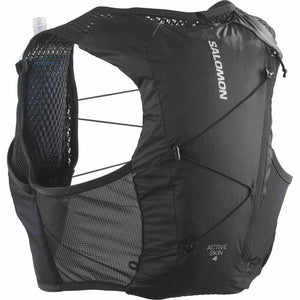
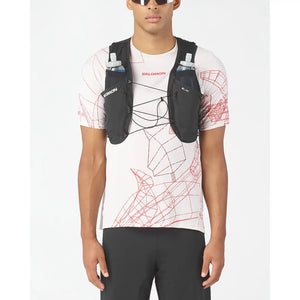
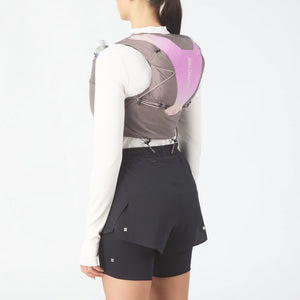
See all our hydration vests and accessories to compare capacities and cuts.
The alternatives: belt and handheld
A vest isn't always necessary. For shorter runs, two light options:
- A hydration belt like the Salomon Cross Belt 2 Bottles: two flasks at the waist, nothing on your shoulders.
- A running handheld flask or bottle like the Salomon Active Handheld Soft Flask 500 ml or the Nathan ExoDraw 2 (18 oz, insulated), designed to sit in your hand effortlessly while you run.
Table: capacity by run type
| Run type | Recommended format |
|---|---|
| Under 1 h / 10K | Handheld flask or belt |
| Half / long run (1–2 h) | 4–6 L vest |
| Marathon / long trail run | 6–8 L vest |
| Ultra / self-supported | 8–12 L vest and up |
Frequently asked questions
Ready to choose your vest?
The right vest is the one you forget you're wearing, kilometre after kilometre. Browse our hydration accessories (vests, belts, flasks), or come try it on in the store to check the cut and the hold.
Read also
What to put in your flasks: water, electrolytes and strategy.